


Current research projects
About our research
Research makes a difference. Evidence-based language support for a multilingual school
The Centre’s research and development projects investigate the acquisition and teaching of German as a first and second language in the context of multilingualism in schools. The Centre’s projects encompass both language acquisition research and empirical-didactic research, with a focus on the development of didactic models and their evaluation within the framework of intervention studies. The Centre’s projects include both longitudinal and cross-sectional studies with both quantitative and qualitative approaches.
The Centre’s projects are dedicated to current topics from society and everyday life, with the aim of enabling learners to have a greater say and participate more fully in society. In doing so, the Centre strives for close links with the practical field of schooling and collaborative partnerships with its stakeholders. Teaching resources developed at the Centre as part of its projects are made available to teachers free of charge online in the form of classroom teaching, professional development and further training materials.
Academic Writing: Step by Step. A project for the long-term development of academic writing skills in schools (2024–2028)
Funding body: FWF
The project ‘Developing Academic Writing Skills’ uses academic controversies to prepare upper secondary school pupils, step by step, for writing a pre-university research paper. This is the world’s first longitudinal intervention study aimed at promoting academic writing skills.

Although academic writing skills have been the subject of intensive research in an international context since the 1970s, our understanding of how they can be effectively developed over longer periods of time remains very fragmentary. This is primarily because intervention studies – which examine the effectiveness of writing support measures under controlled conditions – have so far focused on students and covered only short periods. This is because it is practically impossible to establish controlled conditions for students over longer periods: Students attend preparatory courses in academic writing, read and write academic texts as part of their modules, receive feedback from lecturers and sometimes also make use of individual writing consultancy services. With such a multitude of influencing factors, it is hardly possible to draw clear conclusions about the effect of a specific writing support measure.
The Austrian educational context currently offers extremely favourable conditions for closing this research gap. This is because, since 2015, the development of academic writing skills has begun as early as at school: pupils gain practical experience of academic work as early as secondary school by writing a pre-academic project or a diploma thesis. Unlike university students, however, it is entirely possible to create largely controlled conditions for pupils over extended periods, for example within preparatory courses: most pupils do not, as a rule, read or write academic texts outside such courses. Apart from supervision by the subject teacher, pupils do not usually make use of any additional support measures or writing advice.
Three different writing support measures are being compared
The FWF project ‘Development of Academic Writing Competence’ is utilising these favourable conditions for research to conduct the world’s first longitudinal intervention study on the promotion of academic writing competence. Using a sample of 240 pupils over a period of 3 years (Years 9–12) with a total of 6 measurement points, three different genre-based writing support measures (implicit genre acquisition, explicit genre teaching, genre awareness) are compared with one another. Although these are among the most prominent approaches in the didactics of academic writing worldwide, they have not yet been sufficiently investigated empirically.
Overall, the study aims not only to show how pupils’ academic writing quality and motivation to write develop under the influence of different genre-based writing support measures over a period of three years, but also whether and to what extent the academic writing competence acquired through the intervention can be utilised when writing a pre-academic essay.
Furthermore, by engaging with interesting and real-life scientific controversies (e.g. what impact does social media have on mental health?), the study aims to inspire pupils’ enthusiasm for science and strengthen their trust in it.
Muhammed Akbulut’s cumulative habilitation thesis is linked to the FWF project; it focuses on the modelling, assessment and development of academic writing skills at upper secondary level. The aim is to develop teaching approaches and diagnostic tools that can be used to prepare pupils, step by step and on an empirically sound basis, for writing an introductory academic paper at the end of upper secondary education and for university study.
Project Management
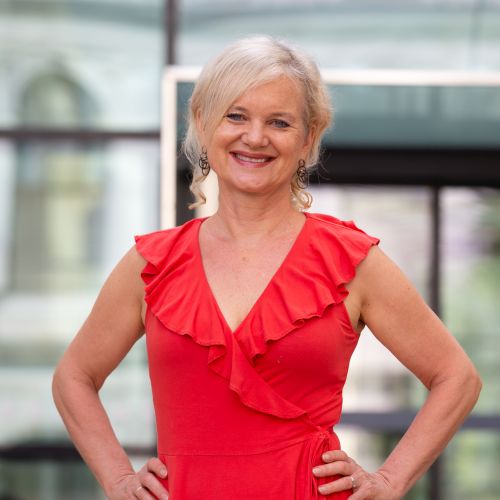
Univ.-Prof. Mag. Dr. Sabine Schmölzer-Eibinger
+43 316 380 - 8393
Center for the Pedagogy of German as a Second Language & Language Education
To schedule an appointment, please contact: silke.sulics@uni-graz.at
http://www.sabineschmoelzer.at/
Project Coordination
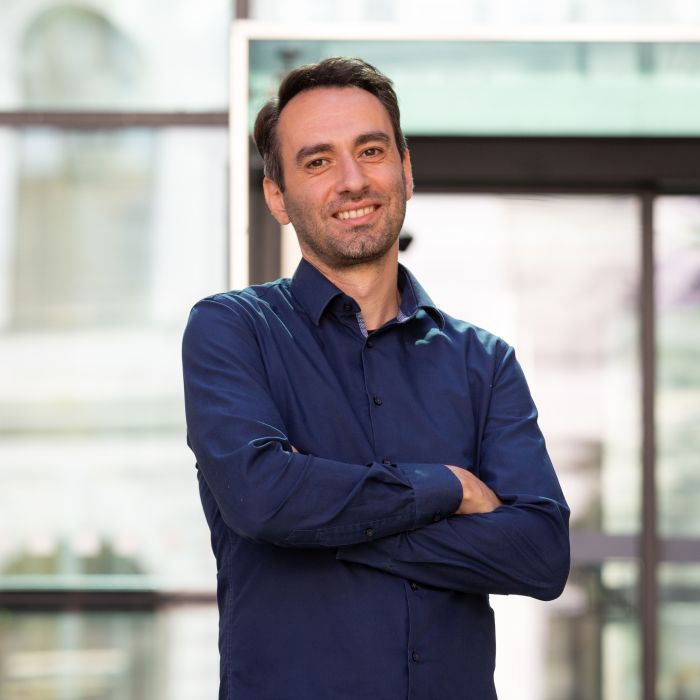
Dr.phil. Mag. Muhammed Akbulut
+43 316 380 - 8395
Center for the Pedagogy of German as a Second Language & Language Education
by appointment
https://fachdidaktikzentrum-daz.uni-graz.at/

Erasmus+ project: ‘Fictional Science (FiSci) – Promoting textual competence in the critical analysis of fake news’ (2022–2025)
Funding body: European Union
How often do we fall for fake news? Do we check content on social media before we share or ‘like’ it? How can we recognise and refute fake news? Recognising and countering fake news requires a critical eye when examining texts and their language.
Thanks to the digital revolution, 21st-century pupils have more opportunities to access information quickly than any previous generation. However, the spread of misinformation is increasing rapidly, particularly on social media. As democratic participation and social involvement require young people to learn to critically scrutinise information, recognise manipulative techniques in texts and participate in social discourse on the basis of reliable information, assessing the trustworthiness of information is a key educational task. However, to verify the factual accuracy of texts, they need not only technical know-how and specialist knowledge, but also textual competence in critically engaging with fake news.
The Erasmus+ project ‘Fictional Science (FiSci)’ – Promoting Textual Competence in the Critical Analysis of Fake News (December 2022–December 2025) – is developing a new didactic approach to identifying and refuting fake news. Initially, learners are confronted with fake news through fictional, didactically constructed texts. This enables learners to focus on acquiring the skills needed to identify disinformation without being distracted by pre-existing opinions or information (the ‘worldview backfire effect’).
As part of this project, FiSci is being implemented as a pedagogical approach in modules for teaching German as a first, second and foreign language by the Centre for Subject Didactics in German as a Second Language and Language Education at the University of Graz (lead partner) in cooperation with the University of West Bohemia in Plzeň (Czech Republic), the University of Zagreb (Croatia) and the Deutsches Haus Kyiv (Ukraine). Furthermore, professional development modules for language teachers, citizen science educational programmes, as well as a computer game, podcasts and dissemination tools for the education sector are being developed.
Project Management
Univ.-Prof. Mag. Dr. Sabine Schmölzer-Eibinger
+43 316 380 - 8393
Center for the Pedagogy of German as a Second Language & Language Education
To schedule an appointment, please contact: silke.sulics@uni-graz.at
http://www.sabineschmoelzer.at/
Project Coordination
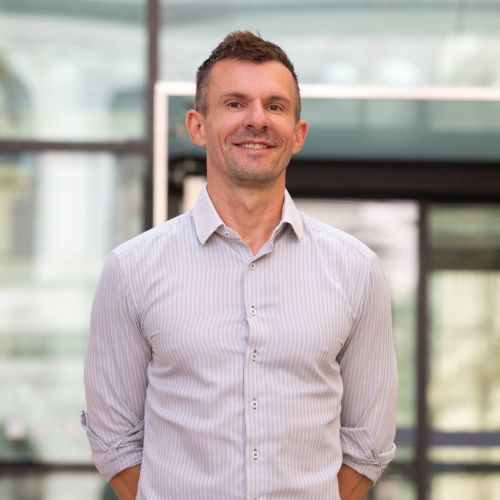
MMag.phil. PhD Stephan Schicker
+43 316 380 - 8391
Center for the Pedagogy of German as a Second Language & Language Education
Thursday 10:00 a.m. – 11:00 a.m. (Advance registration by email required)
Forschungsportal